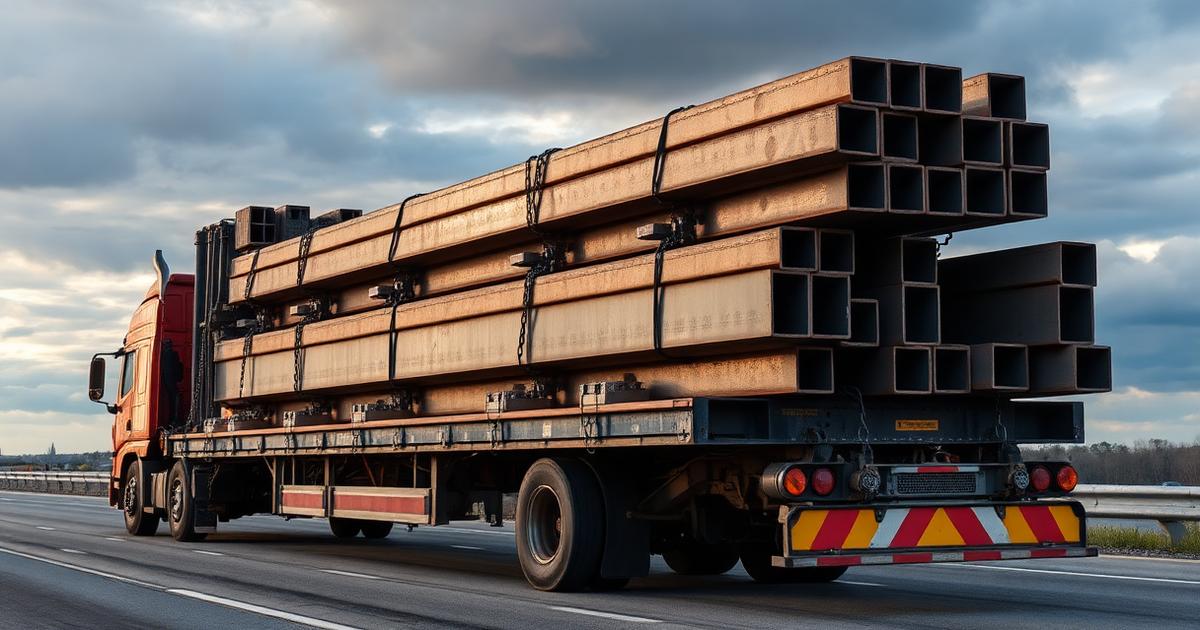
What Is Flatbed Shipping?
Flatbed shipping uses open trailers with no sides, roof, or doors, just a flat platform. This makes them ideal for oversized, heavy, or irregularly shaped freight that can't be loaded through the back of an enclosed trailer.
Common flatbed freight includes:
Steel beams, coils, and pipesConstruction equipment and machineryLumber and building materialsLarge industrial componentsMilitary and government equipmentTypes of Flatbed Trailers
Standard Flatbed
Deck length: 48' or 53'Max weight: ~48,000 lbsDeck height: 60" from groundBest for freight that can be loaded from the side or top via crane or forkliftStep Deck (Drop Deck)
Upper deck: ~11' | Lower deck: ~37'Deck height: 38–42" (lower deck)Ideal for taller freight that exceeds standard flatbed height limitsNo permits needed for loads up to 10' highRGN (Removable Gooseneck)
Deck height: As low as 18" from groundThe gooseneck detaches so equipment can be driven onto the trailerBest for heavy machinery, excavators, and oversized equipmentOften used for loads requiring oversize/overweight permitsConestoga
A flatbed with a retractable tarp system (like a rolling curtain)Provides weather protection while allowing side/top loadingGreat for freight that needs flatbed access but weather protectionSecurement Requirements
Flatbed loads must comply with FMCSA cargo securement rules. Key requirements:
Minimum of one tie-down per 10 feet of cargoChains, straps, or binders rated for the load weightEdge protectors to prevent strap damage on sharp edgesTarping when required: standard tarps, lumber tarps, or smoke tarpsTarping Costs
Tarping is an additional service and typically costs $75–